
Imagine swimming through a beautiful underwater world filled with colourful corals, tropical fish, sea turtles, and other marine creatures. Now imagine returning to the same place a few years later to find large sections of the reef damaged, bleached, or dead. Exactly what I felt when I did snorkelling in lakshadweep. I remember enjoying watching corals when I did snorkelling in Andamans in 2008.
This is becoming an increasingly worrying reality across the world’s oceans.
Coral reefs, often described as the rainforests of the sea, are among the most important ecosystems on our planet. They provide shelter to marine species, support coastal communities, protect shorelines, and contribute to tourism and local economies. However, rising ocean temperatures and climate change are putting these fragile ecosystems under unprecedented pressure.
A new global assessment by the Global Coral Reef Monitoring Network (GCRMN) highlights the alarming condition of coral reefs worldwide, showing how much these underwater ecosystems have changed over the past four decades.
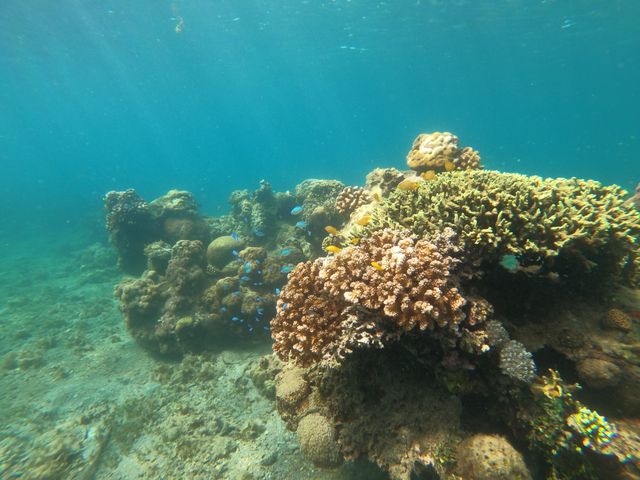
Global Coral Reef Cover Has Declined by Nearly 10%
According to the Status of Coral Reefs of the World: 2025 report, global hard coral cover declined by approximately 9.5% during 2020 to 2024 compared with the average recorded between 1980 and 2009.
The assessment is based on an extensive collection of 21.1 million observations from more than 87,000 surveys across nearly 37,000 reef sites in 120 countries and territories.
The findings point towards a growing environmental crisis, with climate change emerging as the primary driver of coral decline.
Scientists have also warned that the time available for coral reefs to recover between marine heatwaves is becoming shorter, making their long-term survival increasingly uncertain.
Why Are Coral Reefs Turning White?
One of the biggest threats to coral reefs is a phenomenon known as coral bleaching.
Corals are living animals that have a close relationship with tiny algae living inside their tissues. These algae provide much of the energy corals need to survive and give them their beautiful colours.
When ocean temperatures rise beyond what corals can tolerate, they become stressed and expel these algae. As a result, the corals lose their colour and turn white.
This is known as coral bleaching.
Bleached corals are not necessarily dead, but they become more vulnerable. If stressful conditions continue for an extended period, they may die.
Rising sea temperatures, driven largely by global warming, are making these bleaching events more frequent and severe.
Marine Heatwaves Are Leaving Corals With Less Time to Recover
The global assessment highlights four major coral bleaching events between 1998 and 2024, each associated with significant declines in coral cover.
What makes the situation particularly concerning is the shrinking recovery period between these events.
In several regions, marine heatwaves that were previously observed approximately once every decade have become much more frequent, occurring around every five years since 2010.
Corals can recover when ocean conditions improve, but repeated heat stress leaves them with less time to rebuild.
The latest global bleaching event, which likely continued until mid-2025, is another reminder of the growing pressure on marine ecosystems.
Why Should We Care About Coral Reef Loss?
Coral reefs occupy only around one per cent of the ocean floor, yet they support approximately a quarter of all marine life.
Their importance goes far beyond their beauty.
- Marine biodiversity: Coral reefs provide habitats and breeding grounds for countless marine species.
- Coastal protection: They help reduce wave energy and protect coastlines from erosion and storm damage.
- Livelihoods: Millions of people depend on reef-related fishing, tourism, and other coastal activities.
- Food security: Healthy reefs support fish populations that provide food for coastal communities.
- Tourism: Snorkelling, scuba diving, and marine tourism generate income for destinations around the world.
When coral reefs disappear, the consequences extend to marine biodiversity, coastal economies, and communities that depend on healthy oceans.
Can We Still Save the World’s Coral Reefs?
Despite the alarming findings, there is still reason for hope.
Scientists have observed that coral reefs can recover when environmental conditions improve and local threats are reduced.
Protecting reefs from pollution, unsustainable fishing, and physical damage can improve their resilience.
Healthy populations of algae-eating fish are also important because they prevent algae from taking over the spaces where corals grow.
While local conservation efforts cannot replace the urgent need to reduce global greenhouse gas emissions, they can give vulnerable reef ecosystems a better chance of survival.
Also read: Where to Travel in December
How Can Travellers Help Protect Coral Reefs?
Responsible travel is not just about choosing eco-friendly accommodation or avoiding plastic bottles. It also means understanding how our travel choices affect the natural environments we visit.
If you are planning a beach holiday, snorkelling trip, or scuba diving experience, here are a few ways to become a more responsible marine traveller:
- Never touch corals: Even a small touch can damage delicate coral structures.
- Avoid standing on reefs: Always maintain a safe distance while snorkelling or diving.
- Choose responsible tour operators: Support businesses that follow marine conservation guidelines.
- Avoid feeding marine animals: Feeding wildlife can disturb natural behaviour and ecosystems.
- Reduce plastic waste: Carry reusable bottles and bags, and avoid single-use plastics.
- Respect marine life: Do not chase, disturb, or attempt to handle sea turtles, fish, or other marine creatures.
- Support conservation initiatives: Participate in responsible marine tourism experiences and support credible reef restoration programmes.
The decline of coral reefs is not just an environmental concern for scientists and conservationists. It is a reminder of how closely our planet’s ecosystems are connected and how human activities are changing the natural world.
As travellers, we have an opportunity to make more conscious choices. Every responsible diving experience, plastic-free beach visit, and effort to support marine conservation can contribute to a more sustainable tourism industry.
Coral reefs have survived for thousands of years, but their future depends on the actions we take today.
The next time you visit a tropical beach or explore an underwater world, remember that these beautiful ecosystems are not just tourist attractions. They are living habitats that deserve our protection.
Travel responsibly. Protect marine life. Let the oceans thrive.